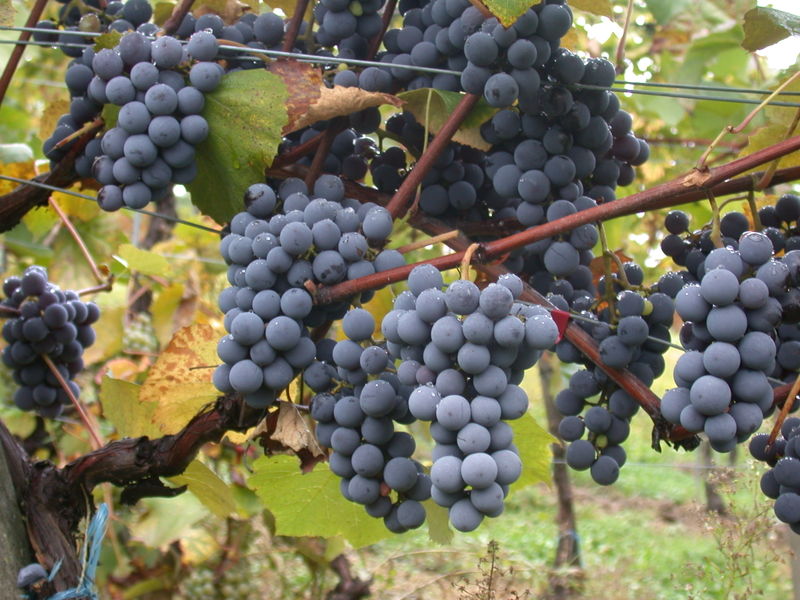
For millions of people around the world, the Gamay grape is synonymous with one thing: Beaujolais Nouveau. This cheerful, fruity, and simple red wine, released with much fanfare on the third Thursday of November each year, has been a brilliant marketing success. But this success has come at a cost. For decades, the Nouveau phenomenon has typecast Gamay as a one-dimensional grape, capable of producing only light, bubblegum-scented wines meant for immediate consumption. This caricature has long obscured a deeper truth known to wine insiders: Gamay is a noble grape, capable of producing profound, complex, and age-worthy red wines that are a pure and transparent expression of their terroir.
The true home of serious Gamay is in the northern part of the Beaujolais region, in a series of ten villages, or “crus,” that are the heart and soul of the appellation. Unlike the flat, fertile plains in the south where the grapes for Nouveau are grown, the Beaujolais Crus are a landscape of steep, rolling hills composed of ancient granite, schist, and volcanic soils. It is in these specific terroirs that Gamay transcends its simple, fruity reputation and achieves a remarkable level of elegance and complexity.
Each of the ten crus—St-Amour, Juliénas, Chénas, Moulin-à-Vent, Fleurie, Chiroubles, Morgon, Régnié, Brouilly, and Côte de Brouilly—has its own distinct personality, shaped by its unique soil composition and microclimate. To explore the Crus of Beaujolais is to embark on a journey of nuance and discovery, much like exploring the villages of Burgundy’s Côte d’Or.
At one end of the spectrum is a cru like Fleurie. Known as the “Queen of Beaujolais,” wines from Fleurie are typically aromatic and silky, with delicate floral notes of violets and roses layered over bright red fruit. They are the epitome of Gamay’s pretty, elegant side. At the other end is Morgon. Here, the decomposed schist soils (known locally as roche pourrie or “rotten rock”) produce powerful, structured, and deeply savory wines. A great Morgon is often described as “pinotant” for its resemblance to a fine Burgundy, with complex notes of black cherry, licorice, and earth. With age, it can develop a Burgundian-like texture and aromatic profile.
Perhaps the most powerful and age-worthy of all the crus is Moulin-à-Vent. Its pink granite soils, rich in manganese, yield tannic, full-bodied wines that often require several years in the bottle to soften and reveal their full complexity. A mature Moulin-à-Vent can be a stunning wine, with a depth and structure that can rival wines from much more famous (and expensive) appellations.
The key to unlocking this potential lies in traditional winemaking. The finest producers in the Beaujolais Crus, inspired by the legendary Jules Chauvet, have rejected the industrial methods used for Nouveau (like cultured yeasts and rapid, high-temperature fermentations). Instead, they practice meticulous organic or biodynamic farming, harvest by hand, and use a gentle, whole-bunch fermentation technique known as carbonic or semi-carbonic maceration. This method enhances the grape’s aromatic potential while extracting soft, fine-grained tannins. The resulting wines are vibrant, fresh, and full of energy.
This quality revolution in Beaujolais, led by a group of producers often called the “Gang of Four” (Marcel Lapierre, Jean Foillard, Guy Breton, and Jean-Paul Thévenet), has inspired a global re-evaluation of the Gamay grape. Winemakers in other cool-climate regions are now recognizing its potential. In France’s Loire Valley, Gamay is used to produce crisp, peppery reds and vibrant rosés. In Oregon’s Willamette Valley, where it is often planted alongside its Burgundian cousin, Pinot Noir, a new wave of producers is crafting bright, energetic, and terroir-driven Gamays that are earning critical acclaim. It is also finding homes in Switzerland, California, and Canada.
The liberation of Gamay is a story of rediscovery. It is about looking past a commercial caricature to find the authentic soul of a grape. It proves that greatness can be found in unexpected places, and that even a grape with a reputation for simplicity can, in the right soil and in the right hands, produce wines of extraordinary character and depth. For wine lovers seeking value, versatility, and sheer drinking pleasure, the world of serious Gamay is a frontier ripe for exploration.
