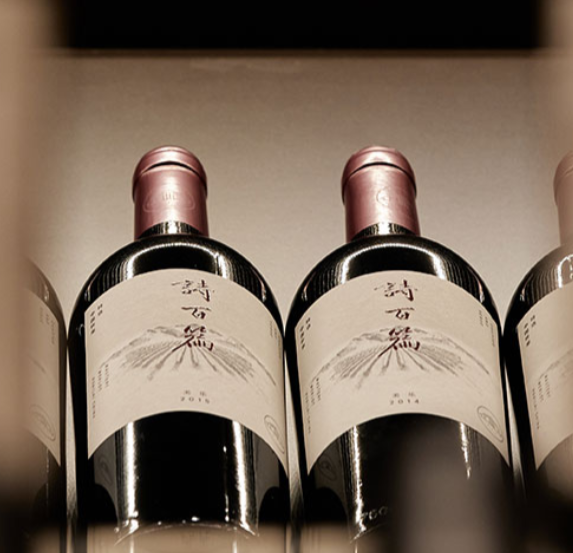
For decades, the mere mention of Chinese wine in connoisseur circles would elicit, at best, a skeptical curiosity and, at worst, a condescending smirk. The prevailing image was one of mass-produced, often low-quality wine destined for an undemanding domestic market. However, in the arid hinterlands and high-altitude plateaus of China, a quiet revolution has been gaining unstoppable momentum. Far from being a mere novelty, the pursuit of high-quality wine in China has become one of the most fascinating and disruptive phenomena on the global wine scene, yielding wines that are beginning to compete—and occasionally win—in blind tastings against storied names from Bordeaux and Napa.
The epicenter of this transformation is not found in the green, humid regions of the east, but in places with extreme conditions that, paradoxically, prove ideal for quality viticulture. The Ningxia region, situated on the edge of the Gobi Desert, has become the standard-bearer for this new era. With an extreme continental climate—hot, dry summers and frigid winters that necessitate burying the vines each year to protect them from freezing—Ningxia presents Herculean challenges. Yet, it also offers unique advantages: over 3,000 hours of sunshine annually, an exceptionally low incidence of fungal diseases thanks to the aridity, and precise water control through drip irrigation fed by the Yellow River.
Here, at altitudes exceeding 1,000 meters, wineries like Silver Heights, Kanaan Winery, and Helan Qingxue Estate are crafting wines that have turned the heads of international critics. Often working with classic Bordeaux varieties such as Cabernet Sauvignon, Merlot, and Cabernet Gernischt (a relative of Carmenère that found a strange and winding path to China), these producers are not aiming to imitate Bordeaux but to express the singularity of their terroir. Ningxia wines typically exhibit a pure, concentrated fruit profile, a firm tannic structure, and a surprising freshness—the product of cool desert nights that preserve acidity. The local government, recognizing the economic and prestigious potential, has invested massively, attracting winemakers and consultants from around the world and creating a kind of vinous “gold rush.”
Even more astonishing is the case of Yunnan, a province in the far southwest of China, bordering Vietnam, Laos, and Myanmar. Here, in the foothills of the Himalayas, the luxury project Ao Yun, owned by LVMH (Moët Hennessy Louis Vuitton), is taking viticulture to new heights—literally. Its vineyards are situated at altitudes ranging from 2,200 to 2,600 meters, scattered across remote villages on the banks of the Mekong River. These extreme conditions, with intense ultraviolet radiation and enormous diurnal temperature shifts, result in grapes with thick skins and a slow, complex ripening process. Ao Yun (“flying above the clouds”) produces a single red wine, a blend of Cabernet Sauvignon and Cabernet Franc, that is both powerful and elegantly fresh, with a minerality and aromatic complexity that reflect its extraordinary origin.
China’s wine journey is not without its obstacles. The lack of a deep-rooted winemaking tradition, the intensive labor required to bury vines, and often-complicated logistics are real challenges. Furthermore, the style of many wines is still being defined, oscillating between New World opulence and a more classic structure. However, the speed of progress is staggering.
What makes these Chinese wines a perfect fit for this project’s philosophy is not the grape varieties, which are often familiar, but the radically “other” context in which they are grown. They are living proof that the map of fine wine is not static. They demonstrate that the combination of exceptional (albeit unexpected) terroir, significant investment, and unwavering ambition can create great wines in the most unlikely of places. The dragon of Chinese wine has not only awakened; it is learning to fly, and the rest of the wine world is beginning to take note, with a mixture of awe and, perhaps, a little apprehension.
