When one thinks of Spanish wine, the mind often wanders to the sun-drenched plains of La Mancha, the historic cellars of Rioja, or the powerful reds of Priorat. It rarely, if ever, travels to the green, misty, and mountainous landscape of Asturias. Known as España Verde (Green Spain), this is a region more famous for its cider (sidra), hearty bean stews (fabada), and rugged coastline. Yet, tucked away in the southwestern corner of the principality, a remarkable story of viticultural survival and revival is unfolding. This is the story of DOP Cangas, Spain’s smallest and most improbable wine appellation, a place where making wine is an act of defiance against nature itself.
The vineyards of Cangas del Narcea are the last remnant of a once-thriving wine culture that stretched across Asturias, largely cultivated by monasteries in the Middle Ages. Over the centuries, disease, economic shifts, and the overwhelming dominance of cider culture pushed viticulture to the brink of extinction. What remains is a viticultural island, a living museum of grape varieties and traditions found nowhere else on earth. The landscape is breathtakingly severe. Vineyards are planted on impossibly steep slopes of slate and quartz, often terraced and reaching inclines of over 30%. This is the textbook definition of “heroic viticulture,” a term reserved for places where viticulture is a manual, often perilous, labor of love. Tractors are useless here; everything, from pruning to harvesting, must be done by hand.
This challenging terroir is precisely what makes the wines of Cangas so unique. The combination of the dramatic slate slopes, high altitude, and a cool, humid Atlantic climate creates wines that are defined by their freshness, elegance, and pronounced minerality. These are not powerful, fruit-forward wines; they are subtle, savory, and deeply expressive of their mountain origins.
The region’s true treasure lies in its portfolio of indigenous grape varieties, a genetic patrimony that is only now being fully appreciated. The reds are dominated by a quartet of native grapes: the floral and elegant Verdejo Negro, the spicy and structured Carrasquín, the rustic and powerful Albarín Negro, and the deeply colored Mencía, which here shows a lighter, more ethereal character than in neighboring Bierzo. Most of the red wines from Cangas are field blends, with these varieties often interplanted in the same ancient vineyard, co-fermented to create a complex and harmonious whole.
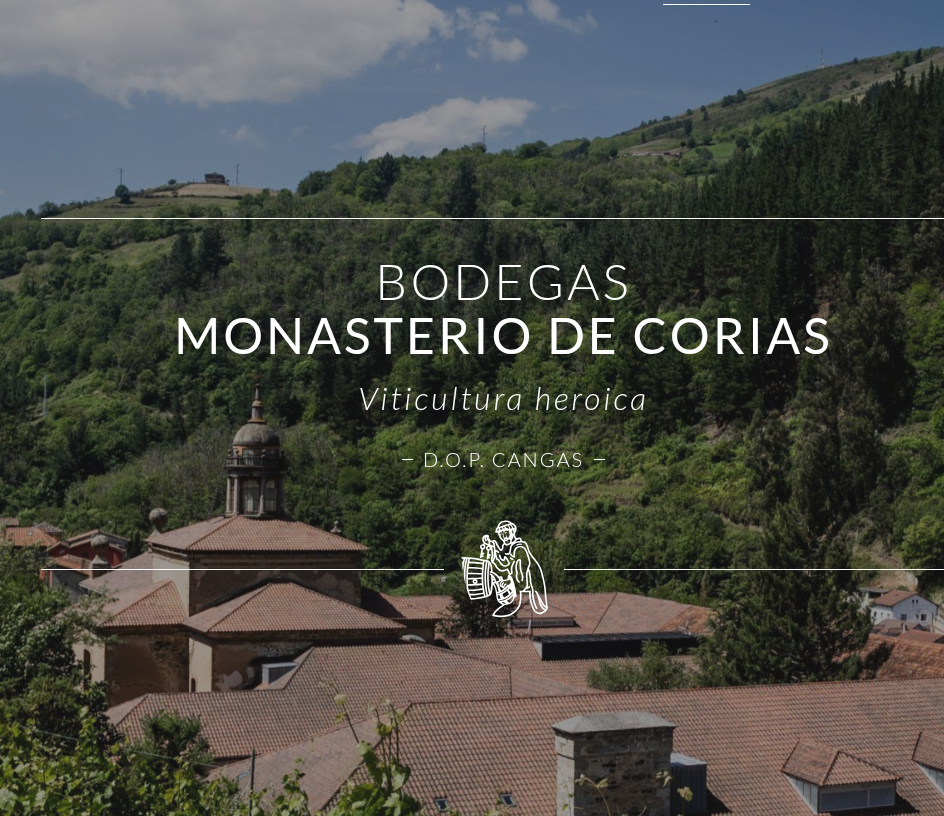
A standard-bearer for the region is Bodega Monasterio de Corias. Housed in a beautifully restored monastery that underscores the historical importance of the church in the region’s wine history, they produce a range of wines that serve as a perfect introduction to Cangas. Their “6 Variedades de Cangas” red is a masterful field blend that showcases the synergy of the local grapes, offering a wine with notes of wild berries, black pepper, and wet slate—a liquid snapshot of the Asturian forest.
Another key producer, Bodega Vidas, represents the new generation of winemakers who are pushing the region forward. Run by the Abraldes family, they work with tiny plots of ancient vines, many over a century old. Their approach is one of minimal intervention, seeking to let the unique character of their vineyards shine through.
Alongside these historic pillars, a new generation of winemakers is pushing the region forward. At Dominio del Urogallo, Fran Asencio takes an independent path, recovering 14.5 hectares of very old vines on slate slopes. His red, aged for eight months in French oak, is a complex expression of the terroir, with aromas of ripe red and black fruits, an earthy background, and notes of mountain herbs. In the family winery Martínez Parrondo, José María Martínez Parrondo, the third generation, has brought his family’s legacy into the modern era. He crafts his premium red from Albarín Negro and Carrasquín, creating a young, complex wine rich in fleshy fruit, aromatic herbs, and a powerful sense of place.
The white wines, though smaller in production, are equally compelling. Vitheras, a project led by Carlos Ron and enologist Manuel Peleteiro, proudly call themselves “heroic winegrowers.” They have rescued a 3.5-hectare plot to showcase the splendor of the Albarín Blanco grape. Their wine, which spends five months on its lees in stainless steel, is a benchmark for the variety: clean and suggestive with aromas of white stone fruit, fresh citrus, delicate floral memories, and subtle hints of honey and fennel. The work of these producers, and others like Bodega La Muriella, has been crucial in putting DOP Cangas back on the fine wine map.
To taste a wine from Cangas del Narcea is to taste a story of resilience. It is a connection to a form of agriculture that is almost lost, a tribute to the farmers who refused to let their ancestral vineyards die. It is a reminder that in the most challenging and forgotten corners of the wine world, some of the most beautiful and authentic wines are waiting to be discovered. This is is liquid history, a taste of the last Asturian vineyards.
